Repost: Redeeming St. Patrick’s Day

I posted this entry last year shortly after returning from our first visit to Ireland. Now that we are actually living in Ireland and about to celebrate our first St. Patrick’s Day here, I thought it would be fitting to repost it. Although the drinking and the leprechauns still seem to steal the show here in Ireland, I am reminded that St. Patrick was a real man who really stood for something. So, on Monday as we join thousands of spectators lining St. Patrick’s Street and Grand Parade for (what I’m hoping will be) the most memorable St. Patrick’s Day parade I’ve ever witnessed, I’ll keep good ‘ol Patrick in mind. And hopefully he won’t mind if I have a pint in his memory.


Original Post: Redeeming St. Patrick’s Day and a Shamrock Craft

I’ve never really liked St. Patrick’s Day. People seem to just use it as an excuse to drink too much beer and pinch unsuspecting bystanders who made the unfortunate choice to not wear green on March 17th. This year, however, I’m seeing things a bit differently. You see, I just got back from my first trip to Ireland where I learned a lot about Irish history and who St. Patrick really was (yes, he was a real person). So this year, instead of eating green eggs in a drunken stupor, I am going to try and redeem St. Patrick’s Day for my kids.

Who Was St. Patrick?
First of all, Patrick is not really a Saint (you know, the capital “s” type canonized by the Catholic church). And he’s not even Irish. Patrick was born in Scotland and, when he was about 16 years old, he was captured in a raid and brought to Ireland as a slave (this was in about the year 405–a really long time ago). At the time, Ireland was a radically pagan place– considered to be about as far away from God as any place on the planet. Patrick’s grandfather, however, had been a priest. While Patrick remained in bondage in Ireland he clung to his faith and relied on prayer. Then, after 6 years, he managed to escape and return home.

When Patrick was in his 40’s, God brought him back to Ireland–this time as a missionary (I love God’s sense of irony!). Patrick had become intimately connected with the Irish people during his years in slavery and history tells us that one of his first converts was the very man who had held Patrick in captivity. Patrick went on to spend the next several years of his life preaching and spreading the gospel throughout Ireland. He was so successful in his missionary work that he turned the once-pagan island into one of the early centers of the Christian faith.

Legend has it that on one of Patrick’s missionary journeys through Ireland he came to a castle at the top of a rocky crag called the Rock of Cashel. I had the great honor of visiting the Rock of Cashel a few weeks ago when I was in Ireland:

Ireland Allisons iPhone - 0132

It was here at the Rock of Cashel that Patrick (reputedly) used a shamrock to tell the story of the trinity and then baptized King Aengus. Basically, the illustration of the shamrock trinity is that each of the leaves represents one of God’s persons: Father, Son and Holy Spirit. While they are each separate and unique, they are all part of one whole.

As you look out from the Rock of Cashel to the Irish countryside, it’s easy to imagine what that day must have been like:

Ireland Allisons iPhone - 0136

For The Kids: Shamrock Collages
This week I told my 2 year old about St. Patrick. I told him how he was a man who lived a long, long time ago and that God used him to help other people learn about Jesus. We looked at pictures of shamrocks and I explained the trinity to little David using Patrick’s illustration. It was awesome!

Then the former-kindergarten teacher in me had to get crafty. We decided to commemorate our little shamrock “lesson” with a simple project.

I started by gathering an assortment of green things: scrapbooking paper, pom-poms, foam shapes, tissue paper and a large piece of green cardstock. I also put a dime-sized squirt of glue into a bowl with a Q-tip to use as a paintbrush:

IMG_1348

I used a pencil to draw a shamrock shape onto the cardstock (heavy construction paper or cardboard painted green would also work), then I cut out the shamrock:

IMG_1349

I sat David down at the table and gave him all of the green things I’d collected. He helped me tear the tissue paper into small pieces (this is great fine-motor practice, by the way!). Then I showed David how to use the Q-tip to “paint” glue onto the shamrock where he wanted to stick his green things. Whenever we’re using glue we use the mantra “just a dot, not a lot!”. David had a lot of fun picking out the decorations for his shamrock and sticking them on.

IMG_1355

He required quite a bit of supervision and direction (put the glue here…ok, now pick out another piece of paper..ok, now put the paper on top of the glue…please don’t lick the glue…). In the end, though, his little shamrock turned out pretty darn cute! And the best part of all: we’ll have something meaningful to think about this St. Patricks day.

IMG_1356

DIY Lacing Cards Activity

The other day I was working on a little sewing project while David was playing. He kept coming over to me wanting to “help” me sew. As any parent knows, a child’s help is anything but that–plus, I didn’t think that a 3-year old boy who is prone to throwing every item in sight should necessarily be “helping” with a pile of sharp pins and needles. I made him a deal, though: I would make him his own sewing project if he would just leave mine well-enough alone.

After a quick look around our house I found some supplies to make David his own set of lacing cards. Lacing is a great fine-motor activity for toddlers and preschoolers and something they actually enjoy doing (now if only I could train my preschooler to do all of my mending…). Here’s the how-to:

DIY Lacing Cards

What you need:
-Cardboard (I used a cereal box)
-Scissors
-Tracing templates (I used cookie cutters)
-Hole-punch
-Yarn or ribbon
-Tape

What you do:

1. Start with a flat piece of cardboard. I cut apart a cereal box into pieces that lay flat.

IMG_1461 2. Trace the shapes that you want to use onto the cardboard. I used large children’s cookie cutters, but you could use just about any found object to trace around. Or, if you are the artistic type, you could even free-draw the shapes. It’s up to you. I ended up tracing six shapes onto one cereal box. IMG_1462 3. Cut out the shapes. Then, use a hole-punch to punch holes around the perimeter of each shape. Make sure the holes are not too close to the edge so the cardboard will not tear when your enthusiastic child begins lacing. IMG_1463 4. Tie one end of a piece of yarn or ribbon onto one of the holes with a double-knot. Cut the piece of yarn just long enough so that it can be laced through all of the holes without running out of string. Wrap a small piece of tape around the “open” end of the yarn to make a durable tip. I just used plain white yarn because that’s what I had on hand, but using a variety of colors would be much more exciting! IMG_1464 5. Start lacing! IMG_1474

Color Swirl Milk Experiment

David loves “projects” so I’m always looking for fun, simple activities we can do together. I recently came across this idea for a preschool science experiment involving milk and food coloring. Sold!

To do this “color swirl” experiment you only need a few household materials: a pan or wide-rimmed plate (I used an 8×8 baking dish and it was perfect), dish soap, milk (high-fat or whole milk work best), liquid food coloring, Q-tips and/or toothpicks, and *optional* paper (watercolor paper or construction paper, not computer printer paper)

IMG_3975

Once you’ve gathered your materials, the fun begins! Start by pouring milk into the pan until it just covers the bottom of the dish. Drop 4 or 5 drops of each color of food coloring near the center of the pan so the colors are close together. Tell your preschooler to resist the beautiful colors and keep his hands to himself for 2 more seconds.

IMG_3976

Dip the end of a Q-tip into the center of the colors and watch what happens (nothing, except maybe you push a bit of milk around). Now ask your child what you think will happen if you dip the same Q-tip into soap before dipping it into the center of the milk (“What is your prediction, child? Will anything be different? What do you think will happen?”). Now, generously coat the end of the Q-tip or toothpick with dish soap. Dip the Q-tip into the center of the colors and hold the Q-tip still (I know, holding still is a difficult concept for a preschooler, but trust me–it’s worth it!). Now watch the colors explode as they dance away from the Q-tip!

IMG_3977

Now dip the other end of your Q-tip in the dish soap and poke it down somewhere else in the dish. It’s like magical little fireworks repelling away from the Q-tip!

IMG_3981

I was curious about the science behind the color swirls so I did a quick internet search and found this great website with a thorough explanation. Turns out that dish soap is bipolar–not in the manic-depressive sense, but in the hydrophilic polar (water-loving) and hydrophobic non-polar (water-fearing) sense. When the water-fearing part of the dish soap connects with the fat in the milk, the magic happens. As all of the little soap molecules start racing around trying to find the milk-fat molecules to connect with they push the food coloring out of the way, creating those wonderful swirls.

We thought that the colors were so pretty that we decided to try capturing them on paper. I just cut a few pieces of artist paper down to a size that would easily fit in our pan and we laid each piece straight on top of the color swirls before gently lifting it back up. The color swirl paper looks really beautiful (and, just in case you’re wondering, a few days later they still smell fine!).

IMG_3990

After playing with four batches of milk in the pan, it was time for another experiment. I came up with this one all on my own. What will happen if we replace the milk with water, take away the food coloring, add a bit of dish soap and switch out the Q-tips for scrub brushes? David couldn’t wait to find out!

IMG_3988

Ta-da! Prest-o, clean-o! Now that’s one science experiment that can keep all of us happy.

Angry Birds Learning Activities

The other day I woke up and, like most mornings, the first thing I did was to roll over, rub my eyes, and check my phone for whatever items of crucial importance might have popped up while I was sleeping. Unlike most mornings, however, my phone was flashing a message from my Angry Birds App:

IMG_3642

Seems that someone had the audacity to beat my high score and claim my top spot in the weekly tournament. The only thing is, I’ve never actually played Angry Birds. David is only one who has ever played the game on my phone–which means my 2-year old is somehow an Angry Birds record holder. An Angry Birds prodigy, if you will. I am one proud mother.

And, while I’m sure he’s learning tons about the trajectory and velocity needed to catapult those birds into towers, there is still a part of me that thinks his love of Angry Birds could be redirected into more noble endeavors. I was thrilled, then, to discover that Homeschool Creations has actually created loads of free printable Angry Birds learning activities (yessssss!).

I printed off all 24 pages of the Preschool Angry Birds Activity Pack (there are also a Kindergarten activity pack and vocabulary cards available to print on the site). There were a few activities that required (minimal) prep work like cutting and gluing pieces together, but after only a few minutes I had everything ready for our Angry Birds fun and learning time.

IMG_3646

There are several different age-appropriate activities in the learning packet: line tracing, color words, patterning, sorting, counting, sound-matching, and even puppets for creative play.

David was so excited to see all of the Angry Birds mumbo-jumbo that I don’t think he even realized he was practicing school skills.

photo (2)

After a good hour of intense concentration, David was ready to put down his “Angry Birds games” for awhile.

photo

We will definitely be returning to this packet-o-fun again sometime soon. In the meantime, I’d better get busy. It’s only a matter of time before David passes me up in more than just gaming.

Fun and Learning at the Farmer’s Market

IMG_3329

Today we went on a culinary adventure to our local farmer’s market. I’ve been wanting to visit this market ever since we moved here, and I’m so glad we finally made it! It’s a great farmer’s market with all locally-sourced food–and GOOD food, at that.

Farmer’s markets are really my dream come true: I love fresh produce, bread, cheeses and the like, but I have a hard enough time getting the kids fed and my teeth brushed each day to worry about things like gardening and baking (or cheese making, mind you. Although I can see cows from my kitchen window. Perhaps that’s in my future. We’ll see.). Thankfully there are plenty of people who enjoy doing those things and they gather together every week in the parking lot at my local shopping center so I can reap the benefits.

We had a lot of fun exploring the tents and tables of the farmer’s market…and sampling our way through the stalls. We all enjoyed this cheese (and by enjoyed, I mean the boys ate about 10 slices each) so I felt obligated to buy a round:

IMG_3335

It was getting close to lunch time and all of the food looked so yummy that I couldn’t resist getting a little something. We got some delicious pizza and raspberries–which David quickly smeared over his face like a clown with a bad face-paint job:

IMG_3342

And, since I’m always one to take the easy road for dinner-prep, too, I picked up some roasted chicken and veggies for tonight’s dinner:

IMG_3339

I would have been happy just camping out at a table in the center of the market and eating all day but, alas, my children had other agendas. Turns out 2-year old boys want to touch and smell and taste (read: lick) everything in sight. And babies who were forced to skip their nap so Mom could go to the farmer’s market get cranky.

Before we left, though, we made one last pass through the stalls to play a few quick “farmer’s market games”. The teacher in me couldn’t resist sneaking in a few teachable moments disguised as food-fun. For instance:

  • IMG_3341We compared the size, shape and colors of vegetables at one stand: What is the biggest veggie you can find? What is the longest veggie you can find? Can you find a red vegetable? Can you find a vegetable that is round like a ball?
  • We found vegetables that represented the different parts of a plant: Parsnips for the roots, celery for the stem, and broccoli for the flower.
  • We played farmer’s market bingo (print your own Bingo card here)
  • We played “5 senses”: we looked at, felt, smelled, tasted, and listened to the sounds different veggies made.
  • Together we came up with three questions to ask a farmer, and then we found an obliging farmer to “interview”IMG_3336
  • We counted: Can you put three apples in our bag? Which plate has more cookies on it? How many slices of pizza did Mommy just eat for lunch?
  • We voted for our favorites: after tasting three different cheeses we talked about which was our favorite and why
  • We learned about economics: Money is used to buy the things we want and need. See, Mommy stated with a wallet full of money and now it is empty. Now Mommy needs a second job to support her new-found market obsession.

With full tummies and a (truly) empty wallet, we left the market. Until next week, farmer friends!

The Ultimate “Busy Bag”

IMG_2960

When we moved to Ireland a few weeks ago I had a lot of concerns. Would I get homesick before we even left? Would we like our new home across the sea? Would I remember to pack all of the essentials? But the most important question of all: How would we survive a 10-hour flight with two boys under the age of 3?

Grandma to the rescue! My mother-in-law is incredibly gifted with all things crafty. She can take felt and a sewing machine and fabricate incredible creations (whereas I would take the aforementioned objects and make something worthy for display at a Kindergarten art show). She took her crafting skills to a whole new level when she created this: The Ultimate Busy Bag.

IMG_2933

Inside is a treasure trove of games and activities that could satisfy children not only for a 10-hour plane ride, but for weeks–nay, months–on end.

IMG_2936

She created the bag itself from fabric scraps and her own design. Many of the games were also her own creation, but she did get several ideas off Pinterest and Etsy. The bag is *literally* bursting at the seams with great ideas, so I thought I would share some of them with you here. If you wanted to recreate just one or two of these ideas instead of the whole bag (because, really, I don’t know anybody else who could make all of this in one sitting!) each would make a great small project in itself. These are great ideas to have tucked away for a rainy day (or even a long summer day when the refrain “I’m bored…” starts echoing through your home). I hope you enjoy this as much as we do!

1. Felt pieces and finger puppets.
One of the sides of the busy bag is made out of felt. There are several felt pieces that can be arranged on the “felt board” for imaginary play or story telling. Most of the pieces were cut out of colored felt and then decorated (my mother-in-law’s 6-year old neighbor helped with many of these pieces).

There are sea creatures and an underwater scene:

IMG_2941

Fluffy clouds and an airplane (each of the windows and “decals” can be re-positioned on the plane):
IMG_2942

A house and garden (even our dog, Bota, makes her appearance here!):

IMG_2940

Noah and his ark full of animals (each animal is a finger puppet that can be used separately from the felt board for songs, stories, or pretend play):

IMG_2939

And, of course, the rain and the rainbow for Noah:

IMG_2938

Jesus and his disciples can even sail across the Sea of Galilee in their trusty boat:

IMG_2937

2. Dry erase markers and letter practice.

IMG_2923There is a folder filled with sheets of handwriting practice, each page inside its own plastic sheet protector. Each dry erase marker has a color-coordinated pom-pom hot-glued to the cap that can be used as an on-the-spot eraser. David uses the colorful dry erase markers to trace the letters and color the pictures in his handwriting book–when he’s done, he just flips over the marker and uses the pom-pom eraser to clear the page. It is easy to find handwriting worksheets online (just do a Google search for “handwriting practice” or “handwriting printable” and look under images). You could also insert pages from coloring books, outlines of common objects, or blank pages for your child to draw on with the dry erase markers.

3. The Mitten book and finger puppets

This is one of the boys’ favorite activities in the busy bag. My MIL found this activity on Etsy, and I think it’s absolutely brilliant. The activity consists of the picture book The Mitten by Jan Brett and a large knit mitten full of finger puppet versions of the animals in the story.

IMG_2929

If you haven’t read this story, you should. Jan Brett is one of my favorite children’s authors, and this one is a classic. In the story (a Ukrainian folktale) a little boy loses his white mitten in the snow. Woodland animals find the mitten and, one by one, they burrow inside the lost mitten to keep warm. As I read the book, David helps to put each animal into the mitten as they appear in the story. It’s a great age-appropriate interactive reading activity–and he just can’t get enough of it. If you don’t have your own mitten and animal finger puppets, you can print off your own mitten craft from the author’s website and make your own!

4. Felt Numbers and Letters

There are two sets each of felt letters and numbers for David to play with and manipulate. The possibilities here are endless! We’ve been using the letters to play “find the sound” (I’ll say a sound and he has to find the letter that makes that sound) and “letter match” (we’ll find a letter in a book or on an object in the room and he has to find the same letter from his pile of felt letters).

I used the numbers to show David representations (using balls, of course, because he will learn ANYTHING 10 times faster if it can be somehow related to balls):

IMG_2944

And we even practiced putting the numbers in order from 0-10 (OK, I did this, but he helped me count the numbers after I got them all set up):

IMG_2952

5. Art and Craft Supplies

IMG_2948There are several art and craft supplies that David can use for his own creative works: markers, scissors, a sketch pad, colorful pipe cleaners, stickers. We’ve been practicing how to use markers on paper ONLY and that we only use scissors when there is a grown-up there to help us. He’s actually been doing really well with all of his “big kid” supplies–especially the fact that he can now color a picture and then cut it into a million pieces. Toddler confetti!

We also like using the pipe cleaners to make “bowls full of worms”. The boys thread the pipe cleaners through the holes in the pipe cleaners (I put them in for baby Jacob) and then pull them out. It’s good fine motor practice..and also just a lot of fun!

photo

6. Some Personal Touches

IMG_2934

There are several smaller items that are personalized to David and Jacob. There is a little American flag so they can remember where they came from (represent!) and a little bendy bear that their dad used to play with when he was little. There is also a really cute set of “ABC Bible Verses” where each letter of the alphabet has a corresponding Bible verse (print your own here). We may have to use these for some memorizaton practice soon!

Thank you for the special gift, Grammy! We will treasure it forever!

IMG_1542

Resurrection Roll Recipe and Bible Story

I love finding creative ways to teach important truths to kids. And I love it even more if I can find a way to tie food into the “lesson”. You can imagine my excitement, then, when I first discovered Resurrection Rolls.

Basically, Resurrection Rolls are a treat that you make where each step of the cooking process represents part of the Easter story. It’s a wonderful way to tell kids the Easter story AND the rolls themselves are sublime. I’ve had people make the rolls for me before, but this was my first time doing the whole project with David. He was able to help out a bit and was pretty engaged the whole time (even if he did keep trying to swipe marshmallows from my stash). I’ll definitely be doing this again next year–a new tradition has been born!

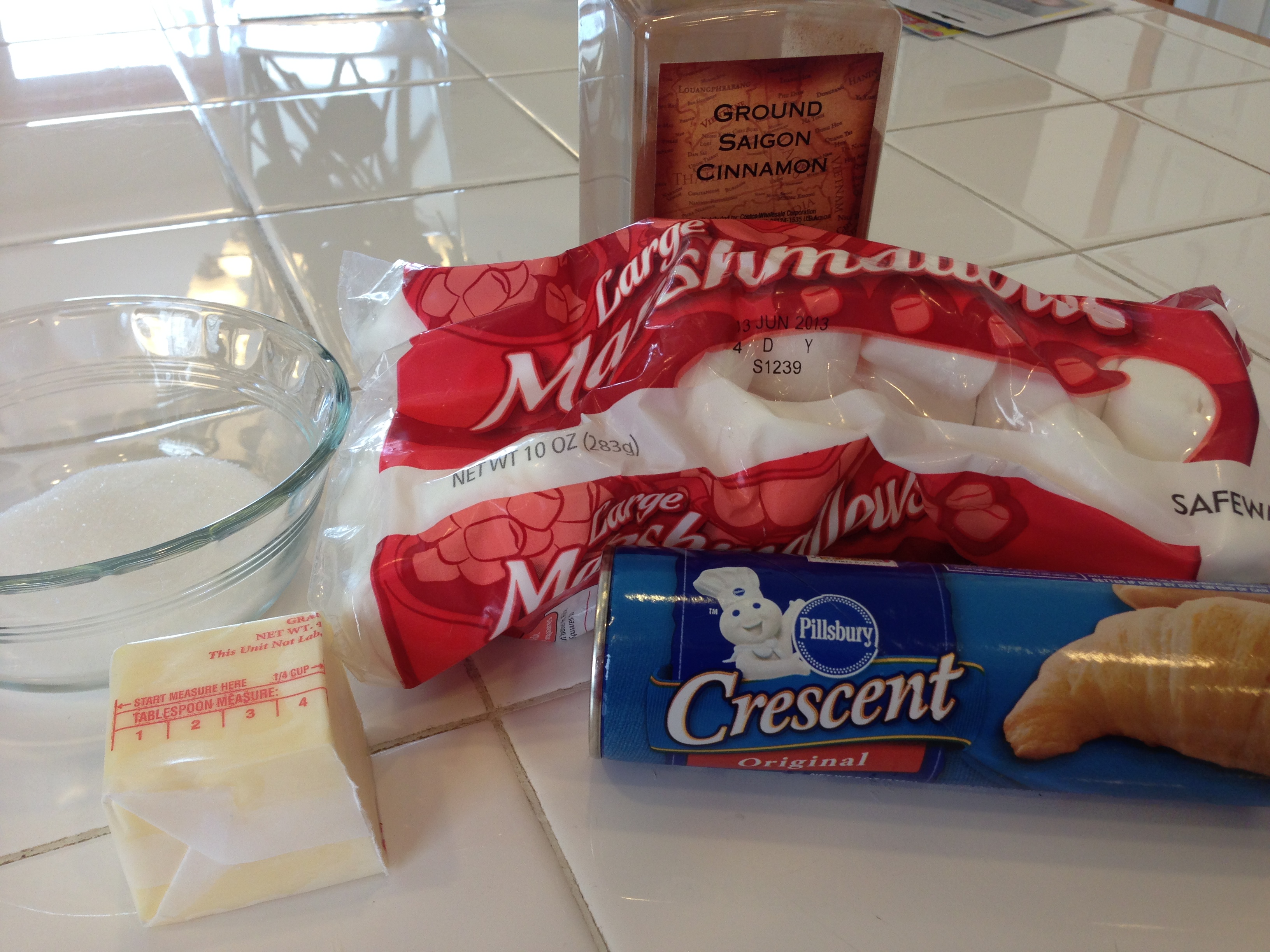
What you’ll need:

IMG_1498

  • 1 package of crescent rolls
  • 8 large marshmallows (plus extras to snack on while you’re waiting for the rolls to bake!)
  • 3 Tablespoons melted butter
  • 3 Tablespoons sugar plus 1 Tablespoon cinnamon
  • Parchment paper
  • Baking sheet
  • Bible (or use the “script” below)

How It’s Done:

IMG_1513Start by preheating your oven to 350 degrees. While the oven is preheating, get out your Bible and open up to John 19 or find the Easter story in a children’s Bible (my favorite is the Jesus Storybook Bible). Below you’ll find the pictures and the “script” for how I told the story to David (he’s only 2 years old, so I kept it simple for him).

IMG_1509

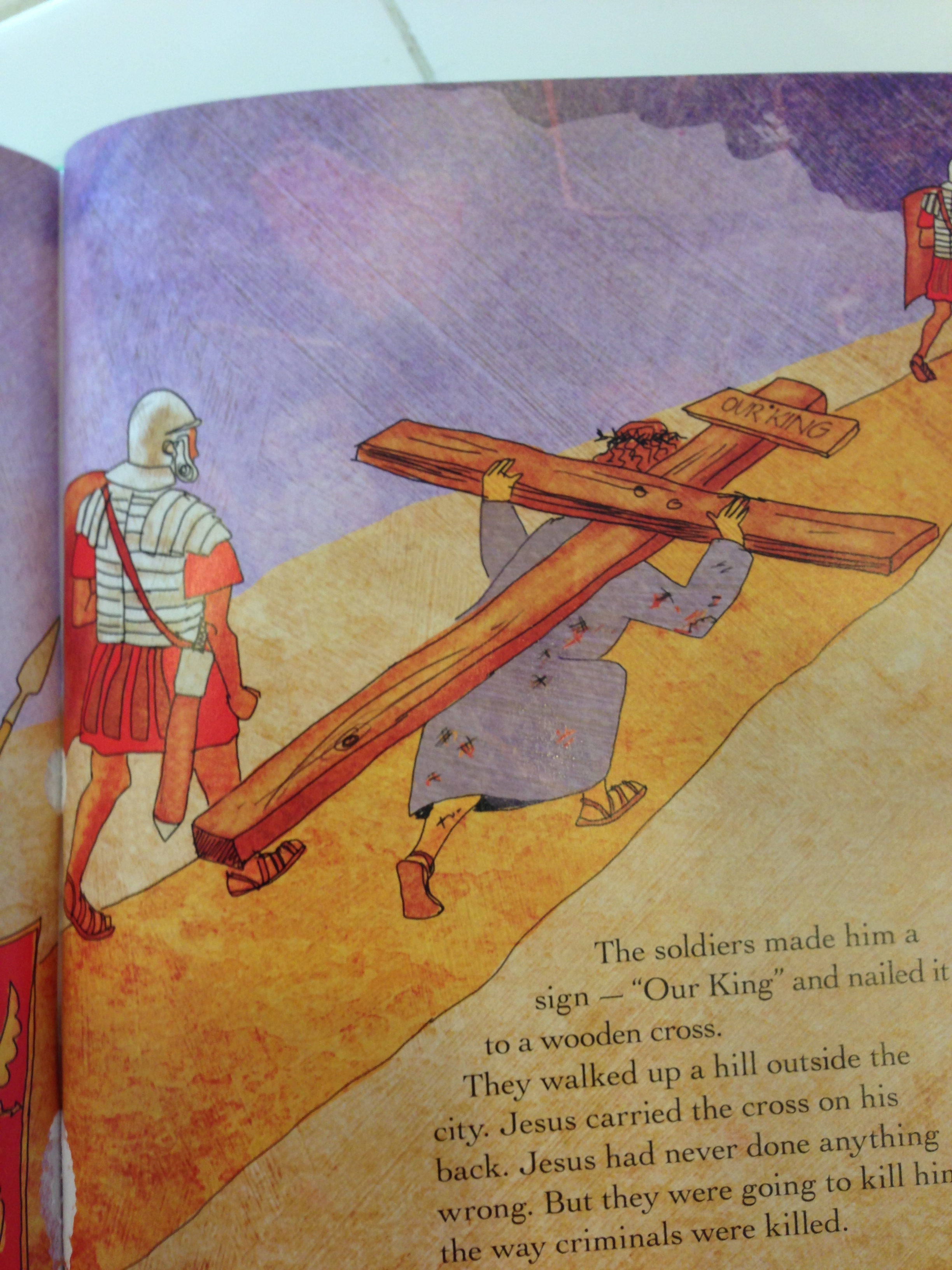
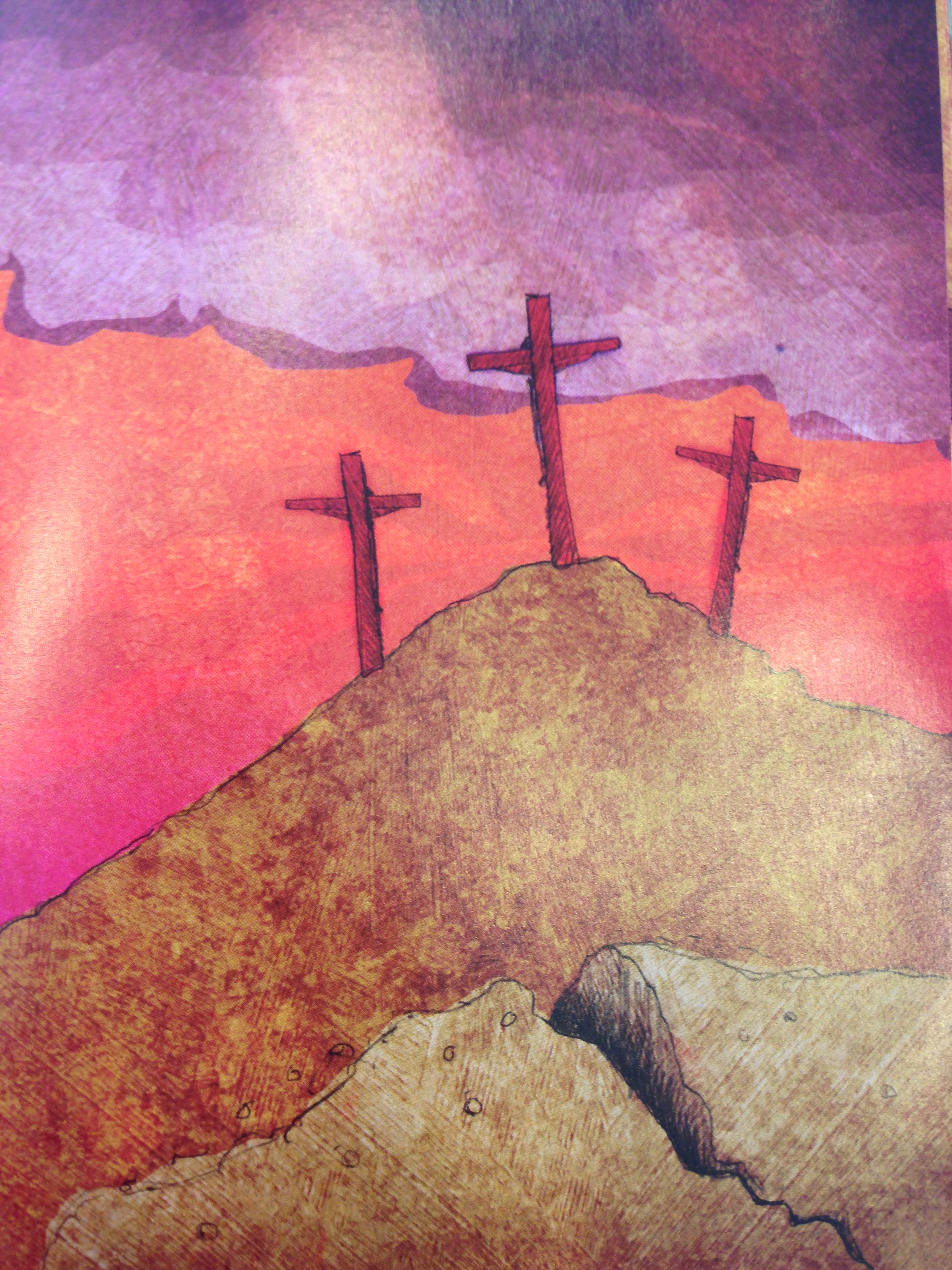
Say: “Even though Jesus was perfect and had never sinned–he had never ever done anything wrong– some people did not like him. They wanted to hurt Jesus because he said he was God. They made Jesus carry a cross and they killed him. This made God very sad, but it was all part of His great rescue plan. When Jesus died, his friends took his body off the cross.”

IMG_1510

Do: Give your child a marshmallow
Say: “This marshmallow represents Jesus’ body. Jesus died for you and for me, because we have sinned and we need to be rescued from our sin.”

IMG_1512

Say: “After Jesus died, his friends came and they put special oil and spices on Jesus’ body to get him ready for burial.”
Do: Roll the marshmallow in melted butter, then in cinnamon sugar

Say: “Next, Jesus’ friends wrapped his body in special cloths–almost like a mummy! Jesus had died, and they were getting his body ready to bury.”
Do: Roll the cinnamon-sugar marshmallow up in a crescent roll (it won’t look like a crescent roll). Press all of the seams firmly. Repeat for each of the crescent rolls. Place the rolls on a parchment paper-lined baking sheet.

IMG_1511

Say: “Next, they laid Jesus’ body in a tomb. A tomb is like a big cave carved out of rock. Then big, strong soldiers rolled a heavy rock in front of the tomb so nobody could get in or out of the tomb. They even put a special seal over the entrance so they would know if anybody tried to move the rock that was in front of the entrance. Soldiers stood in front of the tomb to guard it day and night.”
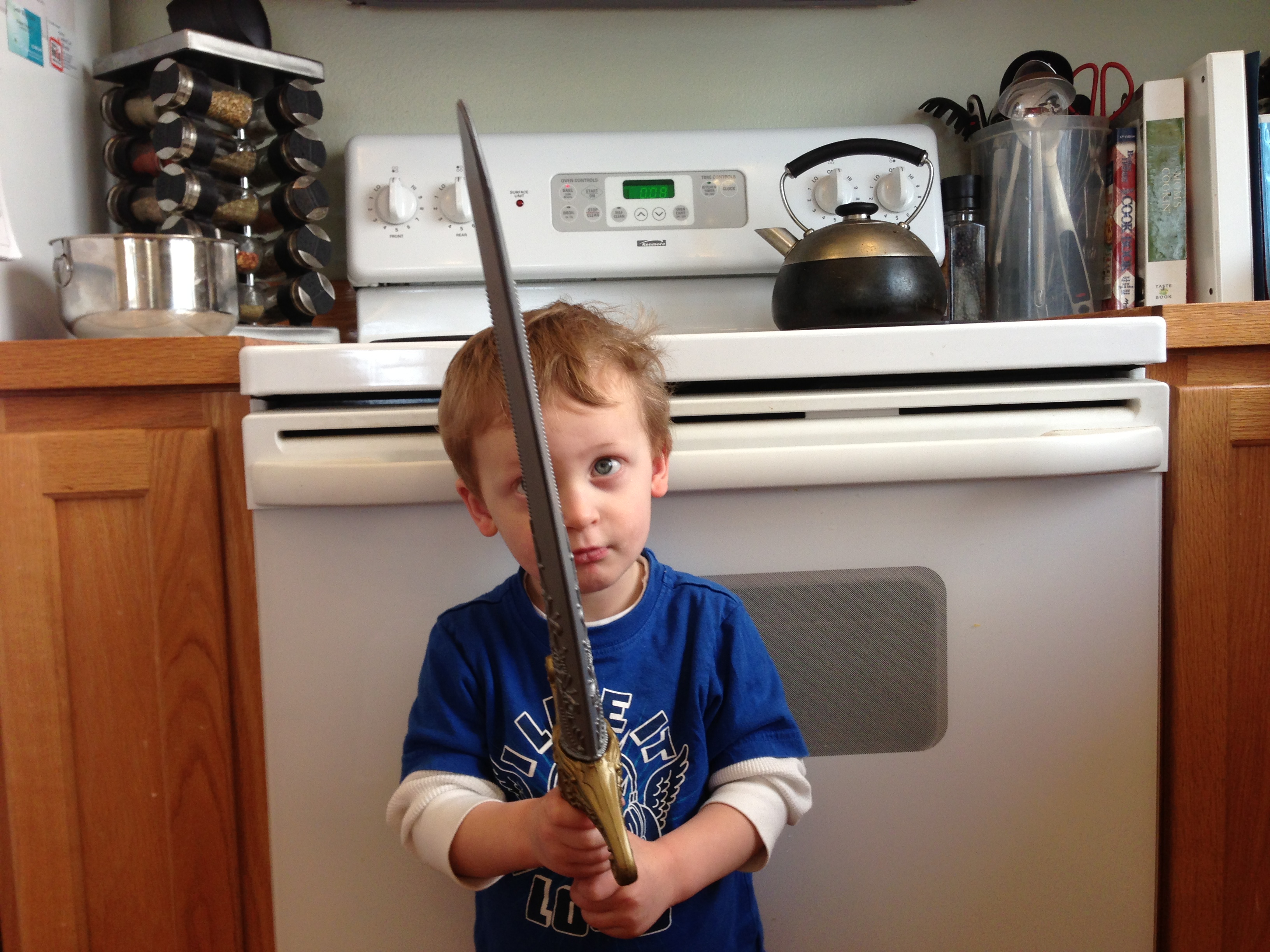
Do: Put the rolls in the oven and set your timer for 10-12 minutes. Let the rolls bake until they are golden-brown. I even let David stand guard in front of our oven “tomb” with his toy sword.

IMG_1506

Say: “Jesus was dead in the tomb for three days. Let’s count to three: one, two, three. How many days was he in the tomb? That’s right, three days.”
(We had some time to wait for the rolls, so I let David play while they were baking. I kept going back to him, though, and we’d repeat this whole conversation about how long Jesus was in the tomb.)

IMG_1514

Do: When the rolls are done baking, take them out of the oven and let them cool (I let mine cool for about 20 minutes, and that was perfect). The marshmallow will probably have exploded out of your rolls, but that’s to be expected (that’s why we put down the parchment paper!). After the rolls have cooled…

IMG_1516

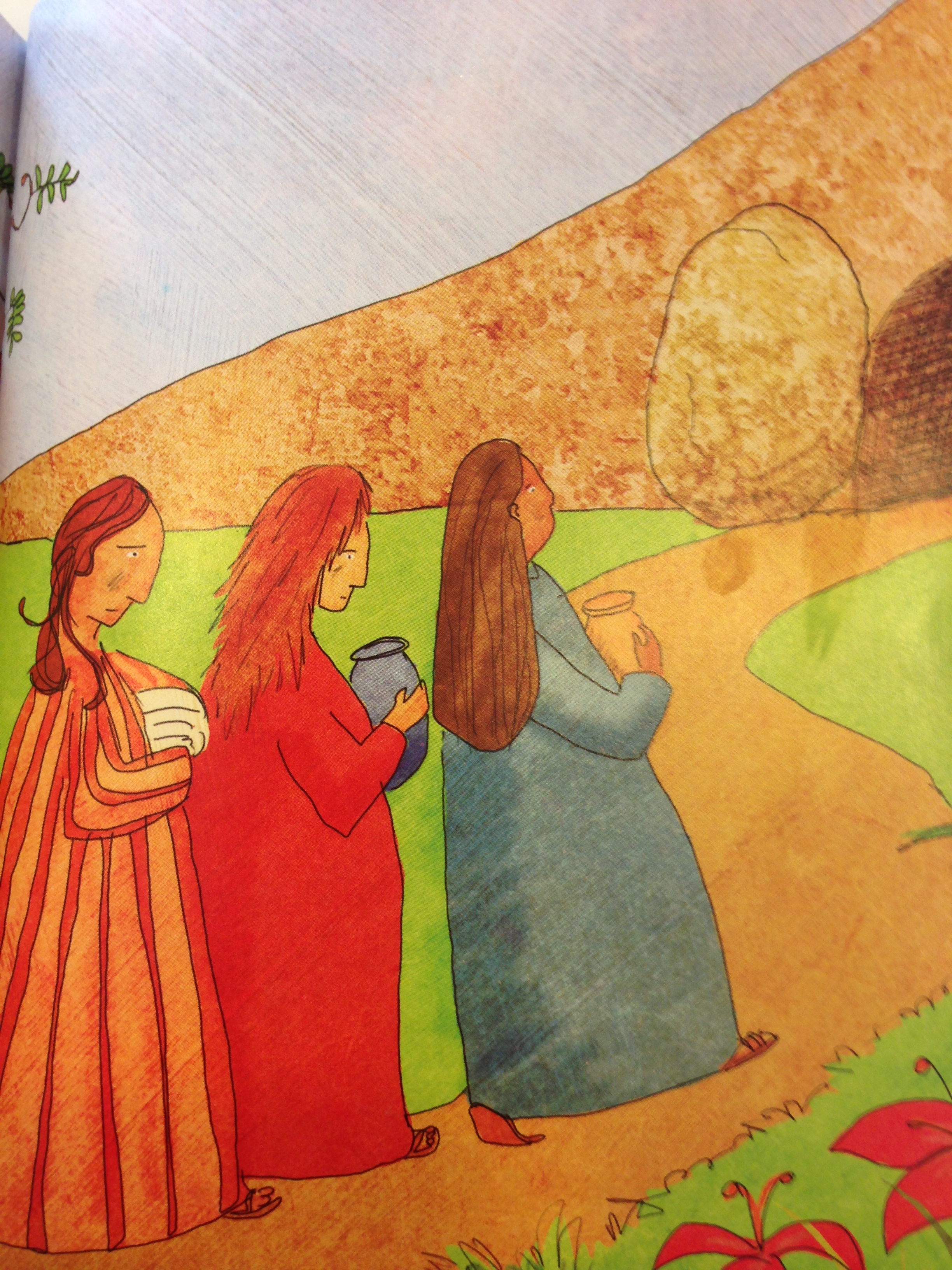
Say: “Three days after Jesus had died, an angel of God appeared to one of Jesus’ friends. He told her that Jesus was alive! Jesus’ friends decided to look in the tomb where they had put Jesus’ body, but when they did, it was empty! Jesus had risen! And still today, Jesus is alive. Today he lives in heaven with God.”
Do: Cut open one of the rolls. The marshmallow has melted, so the “tomb” is now empty.

IMG_1522

Do: Eat your yummy rolls!
Say: “These rolls are sweet, just like the love of God. God made you and he loves you very much. And some day, if you choose to love and follow God, you will be able to spend forever and ever in heaven with him and Jesus. The Bible tells us that Jesus is our Great Rescuer. The Bible tells us that the only way to Heaven is through loving and believing in Jesus. We celebrate Easter, because Jesus died and rose again so that we could have a way to Heaven.”

DIY Easter Resurrection Eggs

Easter is my favorite holiday. And it’s not because I like chocolate bunnies and tie-dyed eggs (even though I do like chocolate bunnies and tie-dyed eggs). I love Easter because I love Jesus, and Easter is the day He triumphed over Satan, sin and death. It is the day that we celebrate all that He has done for us: “…just as Christ was raised from the dead by the glory of the Father, we too might walk in newness of life.” Romans 6:4

It’s easy to lose sight of the true meaning of Easter with all of the commercialism that surrounds it in our culture (case in point: I just got an e-mail from our local mall inviting us out for photos with the Easter Bunny. The 6-foot tall “bunny” with beady little eyes looked pretty creepy in the photo. I don’t think we’ll be going). I want to make sure that my kids know why we celebrate Easter–that it’s not just another excuse to gorge on candy or trudge through the mud puddles looking for hidden surprises (at least, that’s what Easter egg hunts are like in Seattle). I want my kids to know that we celebrate Easter because of something amazing that Jesus did for them. I want them to know that it was a very hard thing for Jesus to do, but He did it because He loves them very, very much. He did it because He wants them to know Him and have a personal relationship with their Savior. And, hopefully, some day they will.

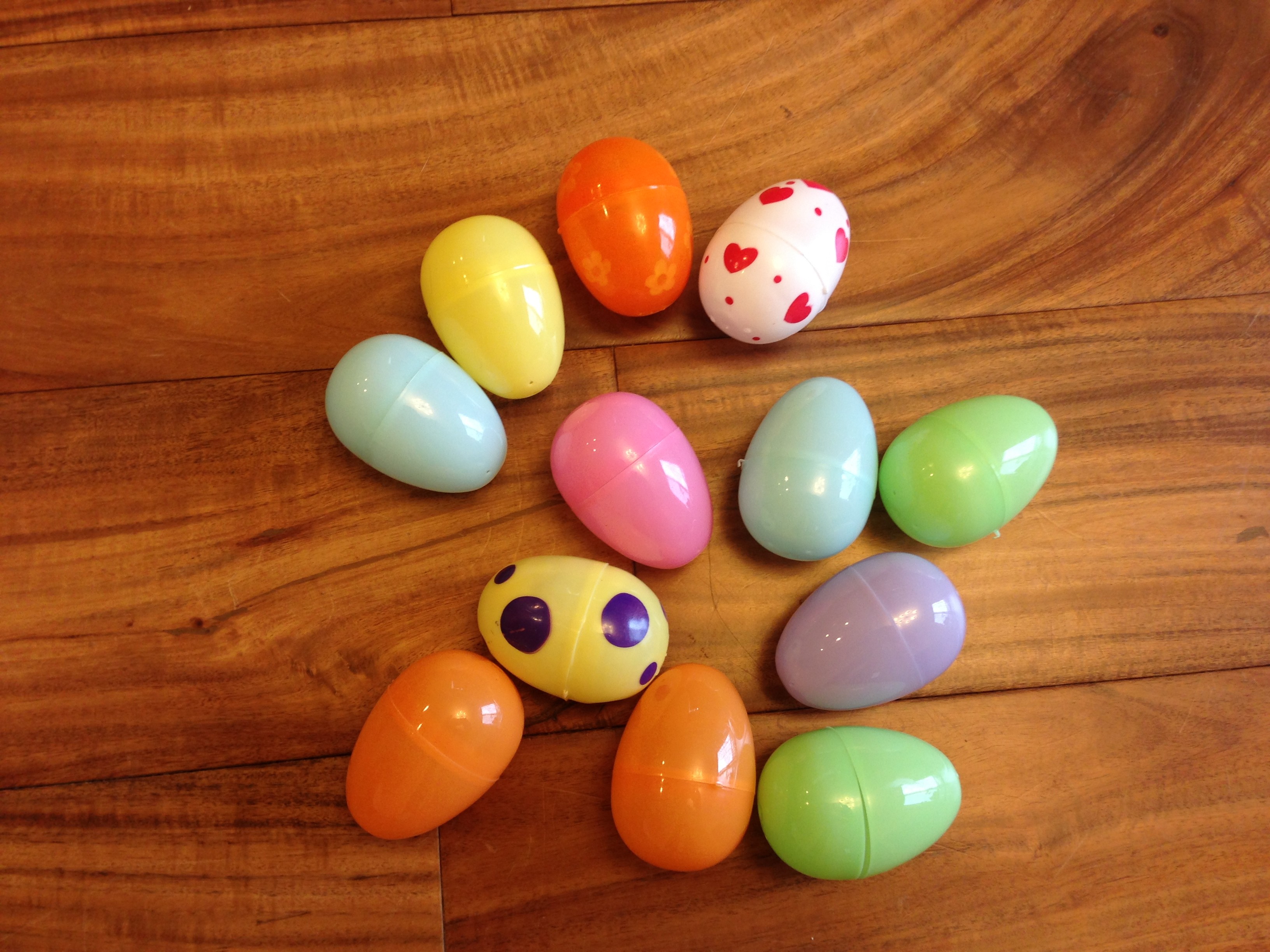
I’ve used Resurrection Eggs in the past to teach my students the Easter story. Basically you fill a dozen plastic eggs with small objects that correlate with Bible verses to tell the Easter story. You open one egg each day until Easter (starting 12 days out), read the verse, and look at the object inside the egg. By the end of the 12 days you’ve told the whole Easter story. It’s a wonderful tool to use with young children so I decided that I’d get a set of Resurrection Eggs for my own kids this year. I looked them up on Amazon and, lo and behold, they were $15! No, ma’am, I will not pay $15 for plastic eggs filled with trinkets. So, I went ahead and made my own. I already had all of the supplies at home and it took about 10 minutes to gather everything and put them together. Here’s what I put together if you want to make your own set of Resurrection Eggs to use with your little ones.

12 plastic Easter eggs. Any size and color will work just fine.

IMG_1420 12 objects that correlate with Bible verses. I used the following:

  • small leaf (symbolizing a plam branch) Matthew 21:9 “The crowds that went ahead of him and those that followed shouted, ‘Hosanna to the Son of David!’ ‘Blessed is he who comes in the name of the Lord!’ ‘Hosanna in the highest heaven!'”
  • nickel (symbolizing 30 silver coins) Matthew 26:14-15 “Then one of the Twelve—the one called Judas Iscariot—went to the chief priests 15 and asked, ‘What are you willing to give me if I deliver him over to you?’ So they counted out for him thirty pieces of silver.”
  • a piece of Chex cereal (symbolizing bread–you could use a small piece of bread or a cracker instead) Matthew 26:26 “While they were eating, Jesus took bread, and when he had given thanks, he broke it and gave it to his disciples, saying, ‘Take and eat; this is my body.'”
  • a “scroll” with Jesus’ prayer on it (symbolizing Jesus’ prayer in the Garden of Gethsemane) Matthew 26:39 “Going a little farther, he fell with his face to the ground and prayed, ‘My Father, if it is possible, may this cup be taken from me. Yet not as I will, but as you will.’”
  • rope (symbolizing the whips that scourged Jesus) Mark 15:15 “Wanting to satisfy the crowd, Pilate released Barabbas to them. He had Jesus flogged, and handed him over to be crucified.”
  • thorn (symbolizing Jesus’ crown of thorns. I used a clipping off my rose bush, but you could use a doll crown or a crown made out of tinfoil instead) Matthew 27:29 and then twisted together a crown of thorns and set it on his head. They put a staff in his right hand. Then they knelt in front of him and mocked him. ‘Hail, king of the Jews!’ they said.
  • nail (symbolizing the nails used in Jesus’ crucifixion) John 19: 16-17 “Finally Pilate handed him over to them to be crucified. So the soldiers took charge of Jesus. Carrying his own cross, he went out to the place of the Skull (which in Aramaic is called Golgotha).”
  • dice (symbolizing that the soldiers cast lots for Jesus’ clothing) Matthew 27:35 “When they had crucified him, they divided up his clothes by casting lots.”
  • toothpick (symbolizing the spear that pierced Jesus’ side) John 19:34 “Instead, one of the soldiers pierced Jesus’ side with a spear, bringing a sudden flow of blood and water.”
  • cloth (symbolizing Jesus’ burial clothes) Matthew 27:59 “Joseph took the body, wrapped it in a clean linen cloth”
  • Rock (symbolizing the stone that was rolled in front of Jesus’ tomb) Matthew 27:66 “So they went and made the tomb secure by putting a seal on the stone and posting the guard.”
  • nothing (OK, so this isn’t so much something as it is a lack of something–there is nothing in the last egg to symbolize the empty tomb!) Matthew 28:5-6 “The angel said to the women, ‘Do not be afraid, for I know that you are looking for Jesus, who was crucified. He is not here; he has risen, just as he said. Come and see the place where he lay. Then go quickly and tell his disciples: ‘He has risen from the dead and is going ahead of you into Galilee.There you will see him.’ Now I have told you.’”

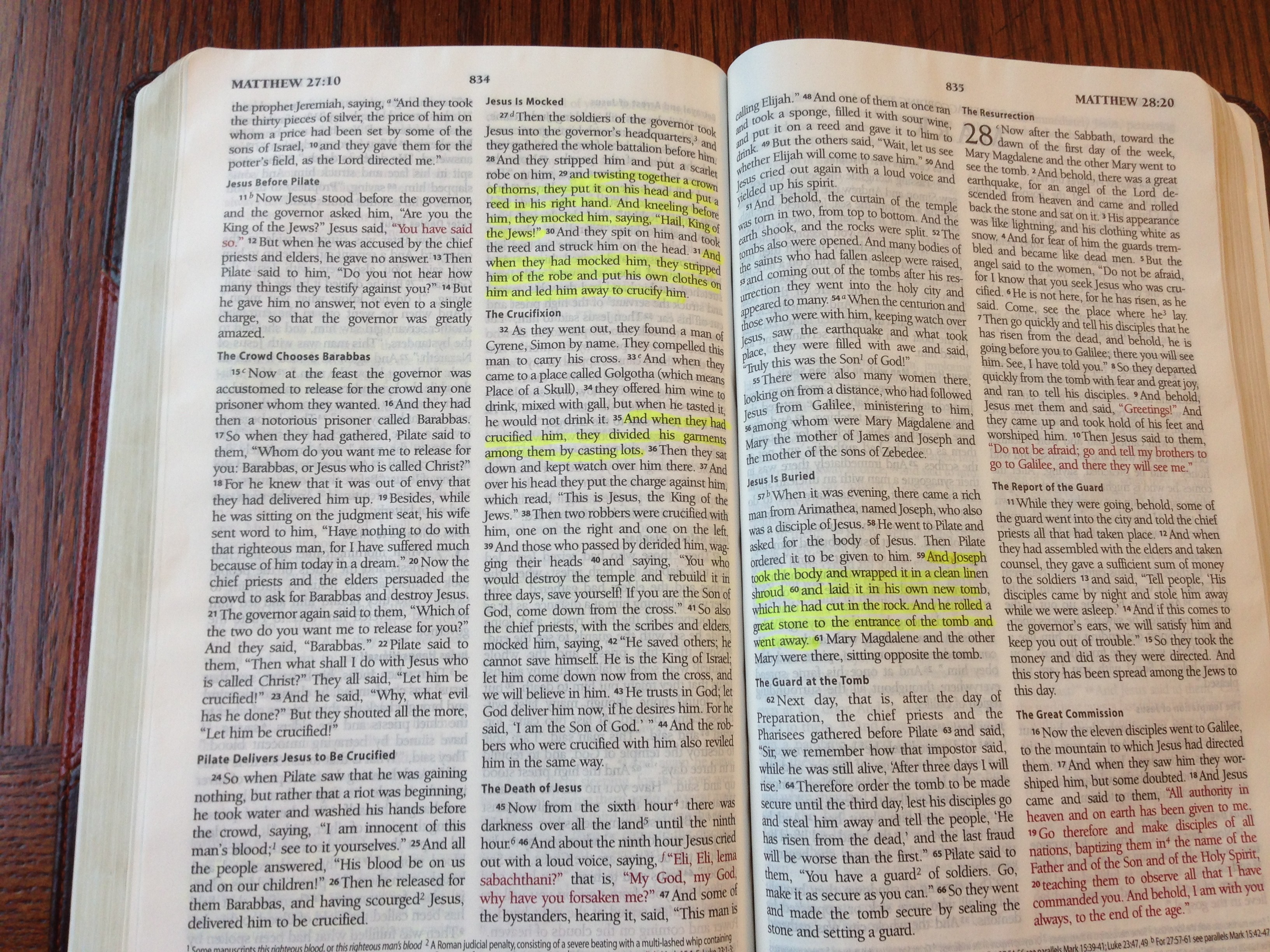
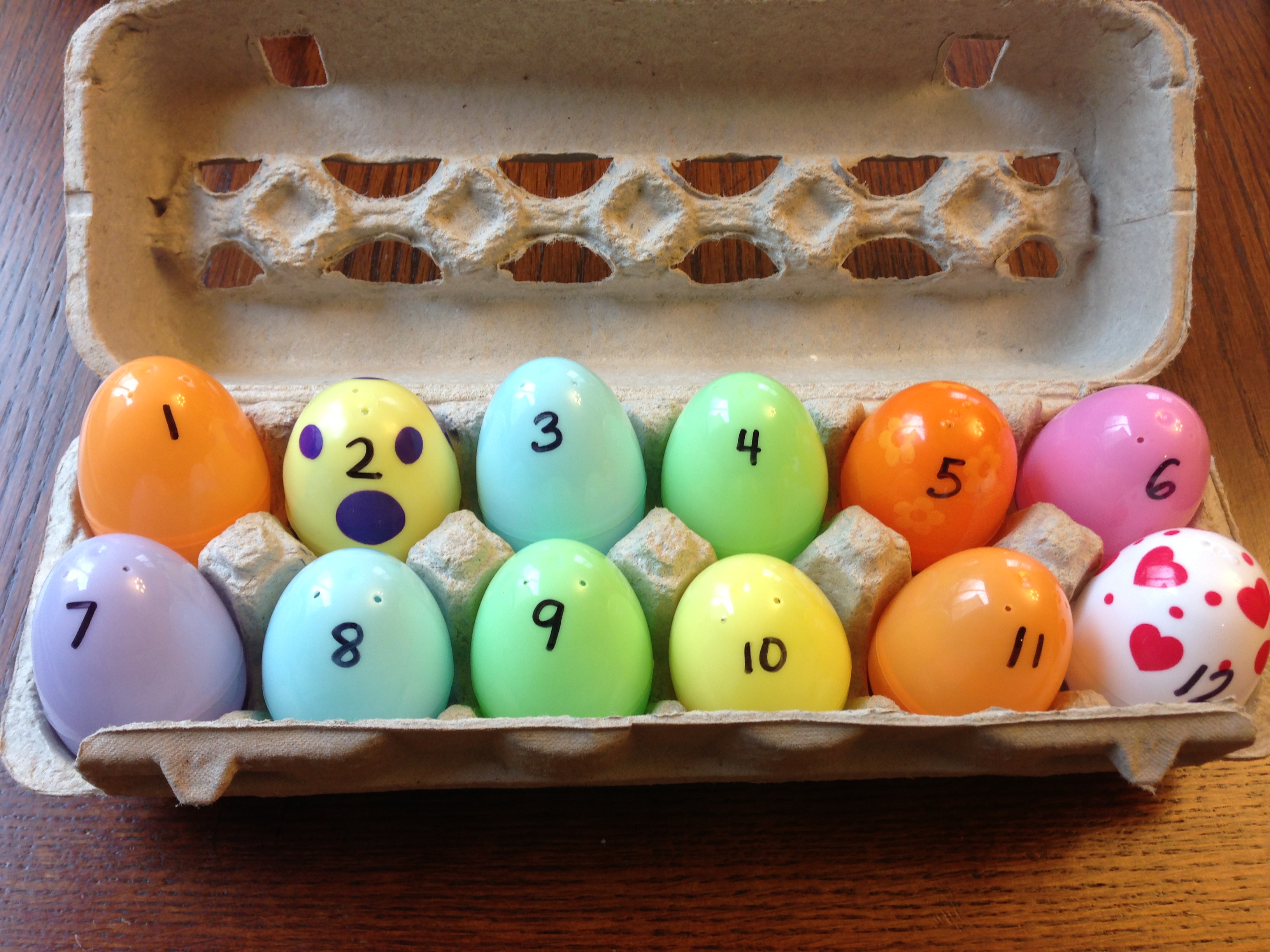
IMG_1421 Bible I like using a physical Bible whenever I can with the little ones. I want them to learn that the Bible is God’s true written Word, and there is something special about having a physical book that they can see and touch and explore. I decided to keep a list of the verses I’ll be using for reference in my Bible and then I hi-lighted each verse in my Bible. I’ll show David the verse in my Bible each day and have him touch the words as I read them to him. IMG_1422 Box or Egg Carton For Storage I just used an empty egg carton to store my eggs in. I used a Sharpie marker to number the eggs 1-12 once I filled them, and then placed them in the correct order. IMG_1423 That’s it, we’re ready to go! This year I will begin using the Resurrection Eggs on Wednesday, March 20th (11 days before Easter so we can open egg #12 on Easter). If you want to do more than one egg per day, or even the whole box at once, go for it! The beauty of this activity is that you can go at your own pace and follow your child’s leading.

There’s also a great book that goes along with the Resurrection Eggs called Benjamin’s Box if you’re interested in some more enrichment.

Happy Easter: He is risen! He is risen indeed!

Redeeming St. Patrick’s Day and a Shamrock Craft

I’ve never really liked St. Patrick’s Day. People seem to just use it as an excuse to drink too much beer and pinch unsuspecting bystanders who made the unfortunate choice to not wear green on March 17th. This year, however, I’m seeing things a bit differently. You see, I just got back from my first trip to Ireland where I learned a lot about Irish history and who St. Patrick really was (yes, he was a real person). So this year, instead of eating green eggs in a drunken stupor, I am going to try and redeem St. Patrick’s Day for my kids.

Who Was St. Patrick?
First of all, Patrick is not really a Saint (you know, the capital “s” type canonized by the Catholic church). And he’s not even Irish. Patrick was born in Scotland and, when he was about 16 years old, he was captured in a raid and brought to Ireland as a slave (this was in about the year 405–a really long time ago). At the time, Ireland was a radically pagan place– considered to be about as far away from God as any place on the planet. Patrick’s grandfather, however, had been a priest. While Patrick remained in bondage in Ireland he clung to his faith and relied on prayer. Then, after 6 years, he managed to escape and return home.

When Patrick was in his 40’s, God brought him back to Ireland–this time as a missionary (I love God’s sense of irony!). Patrick had become intimately connected with the Irish people during his years in slavery and history tells us that one of his first converts was the very man who had held Patrick in captivity. Patrick went on to spend the next several years of his life preaching and spreading the gospel throughout Ireland. He was so successful in his missionary work that he turned the once-pagan island into one of the early centers of the Christian faith.

Legend has it that on one of Patrick’s missionary journeys through Ireland he came to a castle at the top of a rocky crag called the Rock of Cashel. I had the great honor of visiting the Rock of Cashel a few weeks ago when I was in Ireland:

Ireland Allisons iPhone - 0132

It was here at the Rock of Cashel that Patrick (reputedly) used a shamrock to tell the story of the trinity and then baptized King Aengus. Basically, the illustration of the shamrock trinity is that each of the leaves represents one of God’s persons: Father, Son and Holy Spirit. While they are each separate and unique, they are all part of one whole.

As you look out from the Rock of Cashel to the Irish countryside, it’s easy to imagine what that day must have been like:

Ireland Allisons iPhone - 0136

For The Kids: Shamrock Collages
This week I told my 2 year old about St. Patrick. I told him how he was a man who lived a long, long time ago and that God used him to help other people learn about Jesus. We looked at pictures of shamrocks and I explained the trinity to little David using Patrick’s illustration. It was awesome!

Then the former-kindergarten teacher in me had to get crafty. We decided to commemorate our little shamrock “lesson” with a simple project.

I started by gathering an assortment of green things: scrapbooking paper, pom-poms, foam shapes, tissue paper and a large piece of green cardstock. I also put a dime-sized squirt of glue into a bowl with a Q-tip to use as a paintbrush:

IMG_1348

I used a pencil to draw a shamrock shape onto the cardstock (heavy construction paper or cardboard painted green would also work), then I cut out the shamrock:

IMG_1349

I sat David down at the table and gave him all of the green things I’d collected. He helped me tear the tissue paper into small pieces (this is great fine-motor practice, by the way!). Then I showed David how to use the Q-tip to “paint” glue onto the shamrock where he wanted to stick his green things. Whenever we’re using glue we use the mantra “just a dot, not a lot!”. David had a lot of fun picking out the decorations for his shamrock and sticking them on.

IMG_1355

He required quite a bit of supervision and direction (put the glue here…ok, now pick out another piece of paper..ok, now put the paper on top of the glue…please don’t lick the glue…). In the end, though, his little shamrock turned out pretty darn cute! And the best part of all: we’ll have something meaningful to think about this St. Patricks day.

IMG_1356

The Shape-Swat Game

IMG_0846

When I was teaching first grade I used to play  “the fly swatter game” with my students. It’s a great game that you can use to teach and reinforce basically any concept that you want your kids to learn. It’s a lot of fun, takes very little prep time or materials, and can be played for as short or as long a time as you have. You can adapt this game to work with kids as young as 2, but it’s also a lot of fun for older kids (I could even see playing a version of this game with high schoolers!).

IMG_0843To play, all you need is a fly swatter and some cards with your “learning concept” of the moment. For my 2 year old, I decided to focus on shapes and colors, but you could really use anything you want your kids to learn (see variations at the end of this post). My friend Krista told me about a website called mrprintables.com that has lots of fun, high quality free printables. I found some neat shape templates on the website and printed them off.

Then I just cut out the shapes for my “cards”.
*Note* If you want to be able to reuse your cards, glue your shapes onto cardstock or construction paper for some added durability.
IMG_0844

I used blue painter’s tape to tape the shapes up on the wall. Then I gave my little guy his flyswatter and showed him how to swat the shapes on the wall gently (which, in little boy speak, apparently means to strike repeatedly with all your force) .

When it was time to play, I started by saying a shape for him to find: “Find a triangle.” or “Find a square.” and he’d try to swat it. Then we played with colors: “Find a blue shape.” and “Find a yellow shape.”. Then we got really fancy. “Find a green square.”, “Find a round, red shape.” “Find something the same color as the sun.”

The fun thing about this game is that you can really make up whatever questions you want to to keep things interesting. When David would answer incorrectly or have trouble finding what I was asking for, I used it as a teachable moment to show him the correct answer and explain why it was correct. David was having so much fun playing that I doubt he even knew he was learning. Plus, he got to run around the room and hit Mommy’s wall on purpose–every little boys dream come true.

Here are a few variations of the game if you want to play at home with your little ones:

  • If you have 2 or more kids, have a race. Have both kids start at a designated spot with their fly swatters behind their backs. Then call out a card for them to find and have them race to see who can find it first.
  • Hide the cards around the room (but still make them visible without having to move anything) instead of just putting them on the wall. Make your kid run around to find the correct one.
  • Play with animal cards- say an animal’s name or sound and kids have to find the correct picture
  • Play with number cards- say a number or “what comes next: 1,2, __?” and kids have to find the numeral. For older kids, have them find the sum or solution to a math equation (3+2+? , 6-1+?, 3×2=?)
  • Play with letter cards- say a letter’s name or the sound it makes and kids have to find the correct letter. For older kids, you can use letter cards for spelling (find the last letter in the word “chair”).
  • Play with sight words (for ages 4 and up): put a different sight word on each card
  • Play with feelings (as long as you don’t hurt any–hehe!)- do a Google search for people making different faces (happy, sad, surprised, etc.) and print them off for your cards. Have your little one find the different emotions.

The possibilities are endless. Have fun playing with learning!